What is the Difference Between a Pallet Inverter and a Turntable?
As a factory manager, you know that every piece of equipment on your floor must earn its keep. You face constant pressure to boost output, control costs, and keep your team safe. When bottlenecks appear, especially in the final packaging and handling stages, you need solutions that are not just different, but decisively better. Two pieces of equipment often come up in discussions about solving material handling woes: the pallet inverter and the turntable. At first glance, they might seem to serve a similar purpose—moving things around. But confusing them is like confusing a forklift with a conveyor belt; it leads to wasted investment and unresolved problems. For leaders like Michael Chen in Mexico, who oversees a demanding metal processing operation, understanding this distinction is the first critical step toward making an investment that truly pays off.
The core difference lies in their primary function: a pallet inverter is designed to transfer a load from one pallet to another, while a turntable is designed to rotate a load for access or repositioning. One swaps the foundation, the other spins the product. This fundamental distinction dictates everything from the machine's design and operation to the specific problems it solves on your factory floor. Choosing the wrong one can lock in inefficiency instead of unlocking productivity.
Let's break down why this matters. In heavy industries like steel coil and wire rod processing, the wrong handling method doesn't just slow you down—it damages products, risks worker safety, and eats into your bottom line. By the end of this article, you'll have a clear, actionable understanding of both machines. You'll know exactly which one addresses your specific pain points, whether it's eliminating manual pallet changing, improving ergonomics, or streamlining your packaging line. We'll move beyond basic definitions and dive into the real-world applications that matter to an operations director.
1. What is a Pallet Inverter and What Problem Does It Solve?
Imagine a finished pallet of steel coils, securely strapped and ready for shipment. Suddenly, a quality check reveals the wooden pallet underneath is damaged, or a customer requires a specific plastic pallet for hygiene reasons. The traditional solution? A nightmare. You would need to manually unstrap the entire load, use multiple forklifts and workers to carefully lift the heavy coils, remove the old pallet, slide in the new one, and then restrap everything. This process is slow, dangerous, and risks damaging the expensive product. This is the exact problem a pallet inverter is built to eliminate.
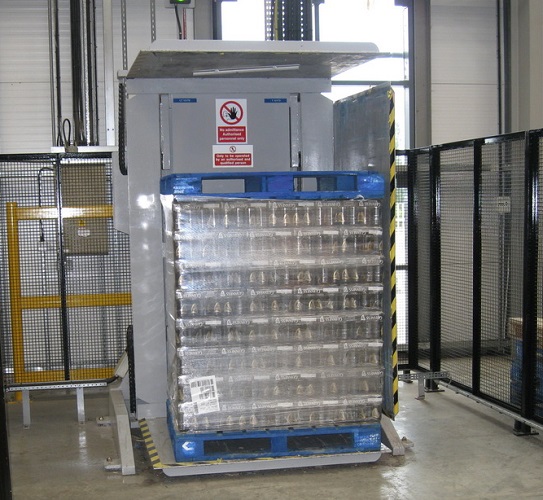
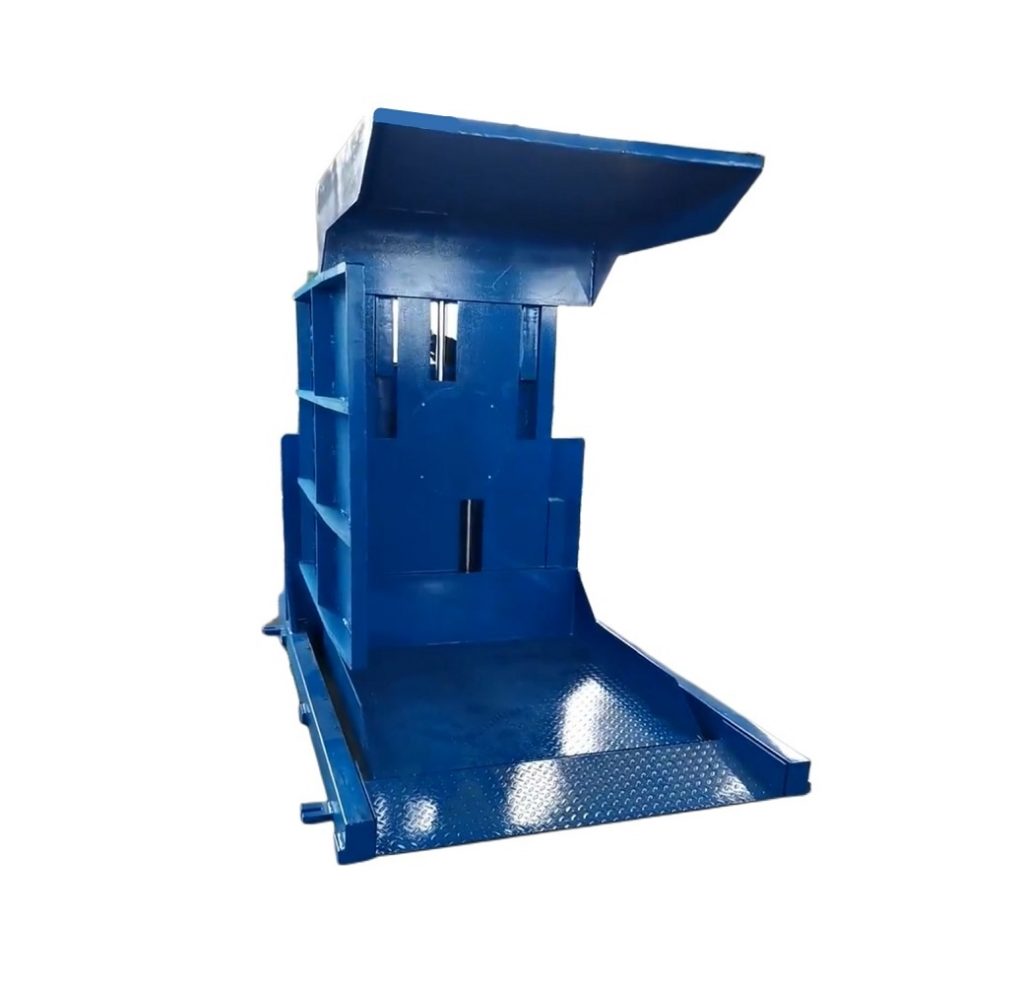
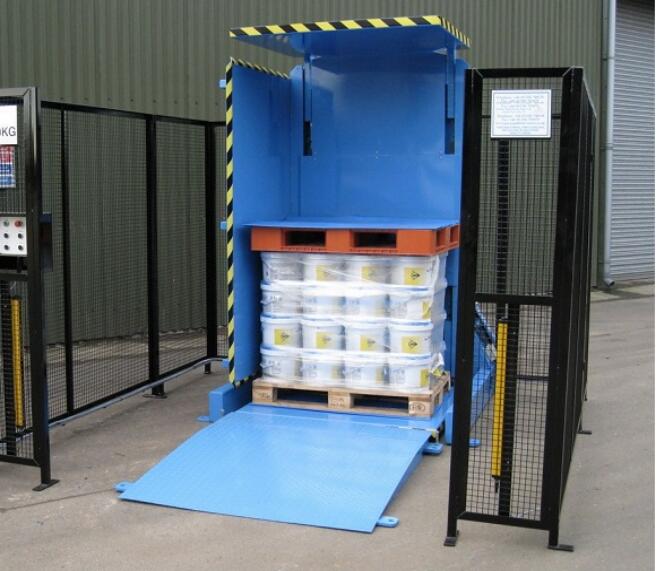
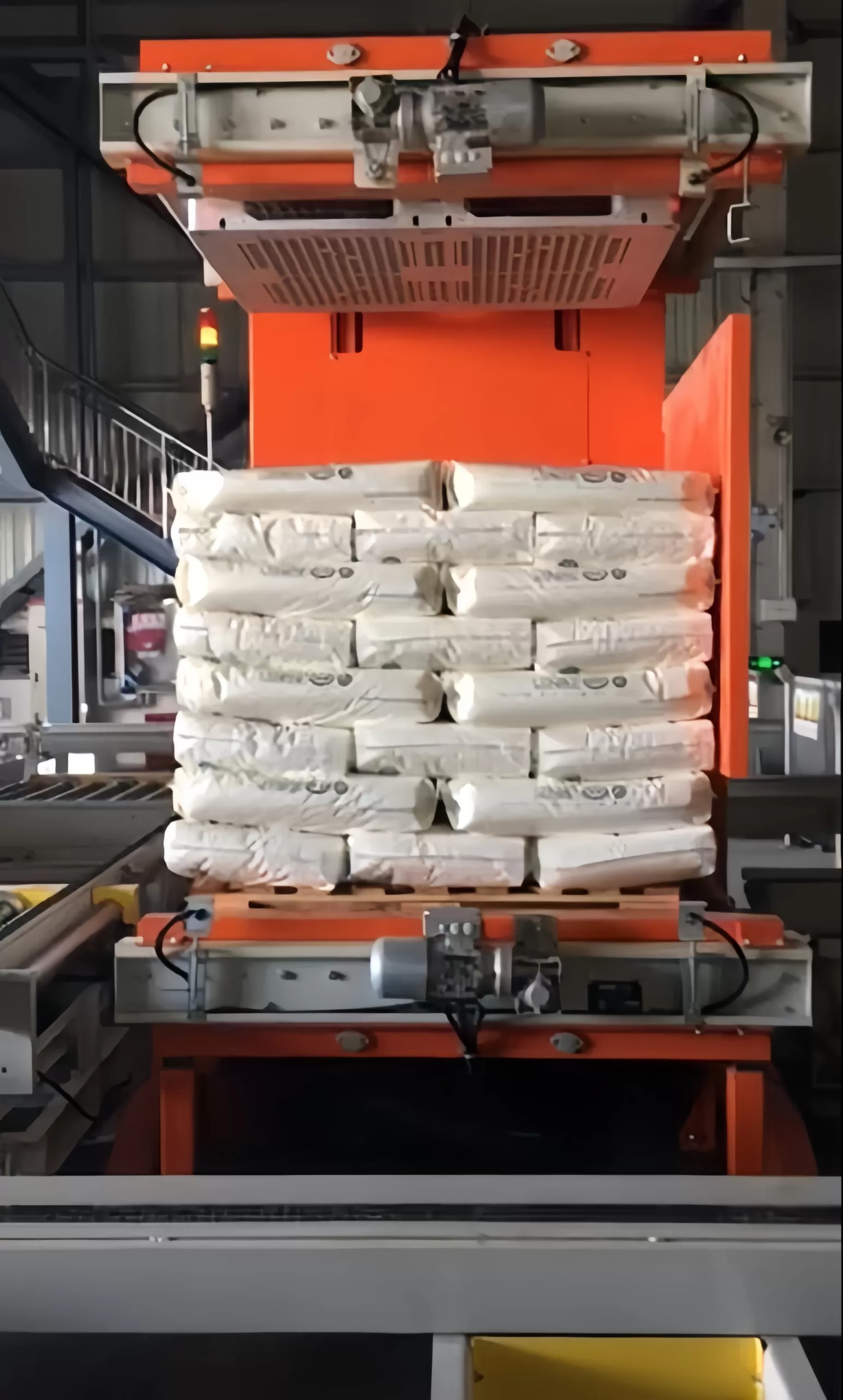
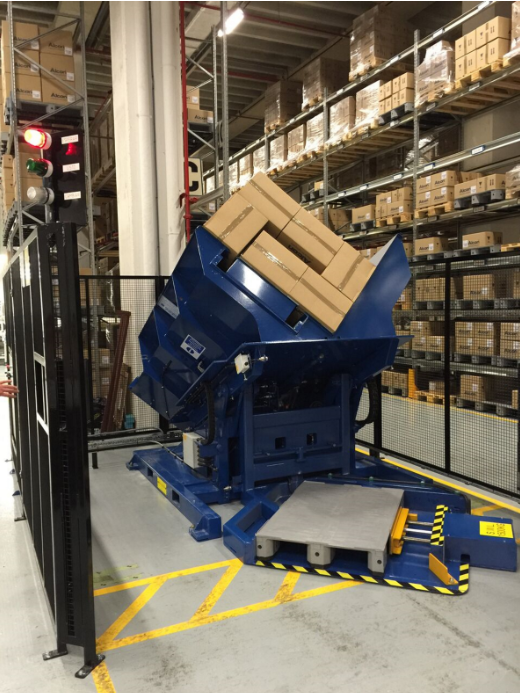
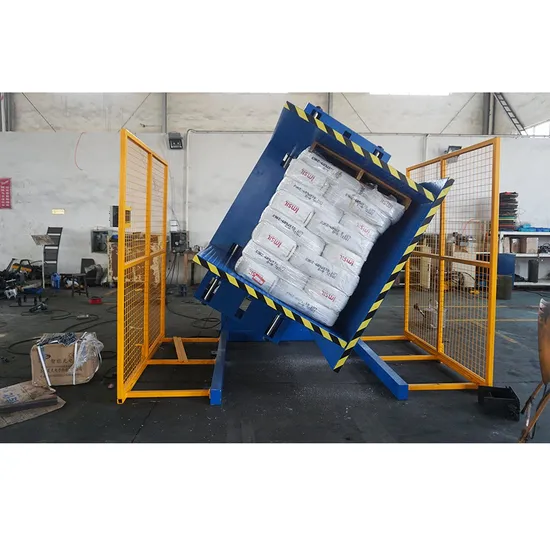
A pallet inverter is a specialized machine that securely clamps a complete load (like a stack of coils) and transfers it from one pallet to another, or from a pallet to a floor-level stand, without disturbing the load's arrangement. It solves the critical issue of pallet exchange and product recovery. Think of it as performing a precise, controlled "pallet transplant" for your heavy industrial loads.
🎯 Core Applications & The Problems They Fix
A pallet inverter isn't a general-purpose machine; it's a targeted solution for specific, costly headaches in logistics and packaging.
- Damaged Pallet Replacement: This is the most common use. Instead of a 2-hour manual ordeal involving 3-4 workers, a pallet inverter can swap a bad pallet for a good one in under 5 minutes with one operator. It directly tackles product damage and labor cost issues.
- Product Recovery from Rejected Pallets: When a palletized load is rejected due to pallet quality (e.g., mold, contamination), the product itself is often still perfect. The inverter saves the valuable product by transferring it to a clean pallet, preventing massive waste.
- Switching to Customer-Specific Pallets: Many large clients, especially in automotive or export, mandate the use of specific pallet types (plastic, treated wood, etc.). An inverter allows you to pack on your standard, cost-effective pallets and then quickly switch to the customer's required pallet just before shipping.
- Unloading Non-Standard or Stuck Loads: Sometimes, products become stuck to a pallet due to weather, glue, or plastic wrap. The inverter can safely separate the load from the problem pallet without prying or impact, which can damage goods.
⚙️ How It Works: The Clamp-and-Lift Mechanism
Understanding the mechanism shows why it's safe and effective for heavy loads like steel.
- Positioning: The machine (often a mobile unit or integrated into a line) positions itself around the loaded pallet.
- Clamping: Powerful hydraulic clamps gently but firmly secure the entire stack of products from the sides. The pressure is evenly distributed to prevent crushing or deformation.
- Lifting & Inverting: The clamping frame lifts the load slightly. The entire frame then rotates 180 degrees. Now, the old pallet is on top, and the new pallet (pre-positioned on the machine's platform) is underneath.
- Lowering & Release: The frame lowers the load onto the new pallet. The clamps retract, leaving a perfectly transferred load. The old, often damaged, pallet is now easily removed from the top.
For a plant manager dealing with heavy, expensive metal products, the value is clear: zero product re-handling, dramatically reduced labor, and the elimination of a major safety hazard. It turns a high-risk, low-efficiency task into a routine, one-person operation. (primary function of pallet inverter, pallet exchange machine, load transfer equipment)
2. What is a Turntable and Where is it Most Effective?
Now, let's picture a different scene on your factory floor. A worker is applying stretch film to a pallet of wire rod bundles. To wrap it evenly, they must constantly walk around the pallet or have a forklift driver nudge it into position. This is awkward, slow, and keeps the forklift and driver tied up in a simple task. Or, consider a packaging station where an operator needs to access all four sides of a pallet to apply labels and seals. Manually moving the heavy pallet for each side is inefficient and ergonomically poor. This is where a turntable shines.
A turntable, or rotating platform, is a device that spins a palletized load around its vertical axis, allowing easy, 360-degree access to all sides of the load without moving the base. Its core function is rotation for accessibility, not transfer. It brings the product to the worker, saving time and movement.
🔄 Key Functions & Operational Benefits
Turntables are workhorses of convenience and efficiency in packaging and inspection areas.
- Pallet Wrapping & Banding: This is the classic application. A turntable allows for consistent, automated, or semi-automatic stretch wrapping. The load spins at a controlled speed while the film dispenser moves vertically, creating a secure, uniform wrap with minimal operator effort.
- Labeling, Inspection & Quality Control: Operators can rotate the load to inspect all sides for damage, verify labels, or apply markings without straining or using material handling equipment.
- Ergonomic Workstation Positioning: In assembly or kitting areas, a turntable can present different components to a worker, reducing reaching and twisting motions that lead to fatigue and injury.
- Directional Re-orientation for Conveyor Lines: In automated systems, turntables can change the facing direction of a pallet to align with the next conveyor or workstation.
📊 Turntable vs. Inverter: A Side-by-Side Look
To make the choice crystal clear, here’s a direct comparison:
| Feature | Pallet Inverter | Turntable |
|---|---|---|
| Primary Action | Transfers load between pallets. | Rotates load on the same pallet. |
| Main Purpose | Pallet exchange, product recovery. | Accessibility for wrapping, inspection, labeling. |
| Load Handling | Clamps the load itself. | Supports/rotates the pallet (and load). |
| Typical Use Case | Replacing a broken pallet under coils. | Stretch-wrapping a finished pallet of rods. |
| Impact on Load | Load structure remains perfectly intact. | Load remains stationary relative to the pallet. |
| Best For Solving | Damage from manual handling, high labor costs in pallet swaps. | Inefficient manual processes in packaging, poor ergonomics. |
For an operations director focused on lean manufacturing, a turntable is a tool for optimizing a stationary process. It makes existing packaging and inspection steps faster, safer, and more consistent. It doesn't solve a pallet problem; it solves a process flow problem. (pallet rotating equipment, packaging turntable, ergonomic material handling)
3. How Do Their Designs and Safety Features Differ?
The difference in function leads to a profound difference in engineering. You wouldn't use the same chassis for a dump truck and a city bus, even though both carry weight. Similarly, the design of a pallet inverter and a turntable is optimized for their unique missions, especially when handling multi-ton metal coils. For a manager like Michael, responsible for worker safety and equipment longevity, these design differences are non-negotiable.
Pallet inverters are built like industrial strength trainers, with a heavy-duty clamping system and a robust rotating frame to manage the immense stresses of lifting and inverting a full load. Turntables are engineered as precise rotating platforms, focusing on smooth, controlled rotation and stable bearing systems to support static weight.
🛡️ Pallet Inverter: Safety Through Structural Integrity
Handling a suspended, heavy load is inherently risky. Therefore, inverter design is dominated by safety-centric features.
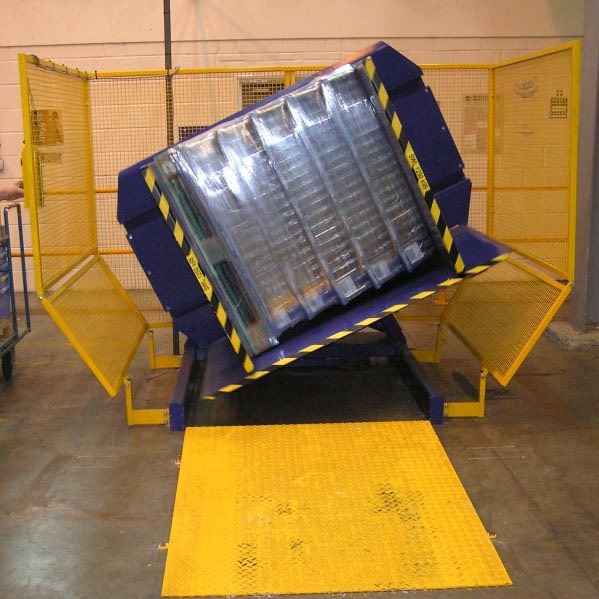
- Hydraulic Clamping System: This is the heart of the machine. The clamps must apply enough pressure to prevent slippage without crushing the product. Premium manufacturers like Fengding use wide, padded clamp arms with pressure sensors and automatic relief valves to prevent overload. This protects both the product and the machine's structure.
- Locked Rotational Path: The 180-degree rotation is performed within a guarded, structural frame. There is no chance for the load to swing or drift during the transfer. The rotation is powered by a reliable hydraulic motor with mechanical locks at the start and end positions.
- Integrated Safety Guards & Interlocks: The entire clamping and rotation zone is protected by light curtains or physical guards. The machine cannot operate if a guard door is open or if a laser beam is interrupted. Emergency stop buttons are placed at multiple, accessible locations.
- Load Stability Monitoring: Advanced systems monitor clamp pressure and load weight distribution in real-time. If an imbalance is detected that could make the inversion unsafe, the operation will pause and alert the operator.
⚖️ Turntable: Safety Through Stability and Control
While not lifting loads, turntables must ensure absolute stability during rotation to prevent toppling, especially with tall or uneven loads.
- Low-Profile, Stable Platform: The deck is kept as low as possible to the ground to maintain a low center of gravity. It is built from thick steel plate to resist bending under heavy point loads from items like steel coils.
- Robust Bearing & Drive Assembly: The rotation mechanism is critical. High-capacity turntables use large-diameter slew bearings (like those in crane turntables) paired with a precision gear drive or friction wheel drive. This ensures smooth, jerk-free rotation without wobble.
- Anti-Skid Deck Surface: The platform often has a patterned or coated surface to increase friction and prevent the pallet from sliding during acceleration or deceleration.
- Controlled Rotation Speed: Variable frequency drives (VFDs) allow the rotation speed to be set precisely for the task—slow for careful inspection, faster for wrapping. This prevents sudden movements that could destabilize a load.
- Perimeter Safety: While often simpler than an inverter, safety bumpers or raised edges can be added to prevent pallets from being driven off the platform accidentally.
Choosing a supplier who prioritizes these design elements is crucial. A Fengding pallet inverter, for instance, is over-engineered for the task, giving a plant manager peace of mind. A flimsy turntable under a 5-ton coil is an accident waiting to happen. The right design is your first and best safety feature. (industrial equipment safety features, heavy-duty pallet inverter design, stable rotating platform)
4. Which One is the Right Investment for My Metal Processing Plant?
This is the million-dollar question—or perhaps the $50,000 to $150,000 question. As a pragmatic manager, you need to see a clear return on investment (ROI). Throwing money at the wrong machine is worse than doing nothing. The choice between a pallet inverter and a turntable isn't about which is better overall, but which is better for your specific operational bottlenecks. Let's translate the technical differences into a financial and operational decision matrix for a metal plant.
You need a pallet inverter if your primary costs and risks are tied to the act of changing the pallet itself—high labor, product damage during re-handling, and pallet-related quality rejections. You need a turntable if your bottlenecks are in the packaging and processing stages after the load is on the correct pallet—slow manual wrapping, inefficient labeling, or poor ergonomics for inspectors.
📝 Decision Checklist for Plant Managers
Answer these questions to guide your investment:
If you answer "YES" to most of these, a Pallet Inverter is your solution:
- ❔ Do we frequently need to replace damaged shipping pallets under finished loads?
- ❔ Do we suffer product damage (bent edges, scratches) during manual pallet swapping?
- ❔ Do customer pallet requirements force us to re-handle loads before shipping?
- ❔ Is manual pallet changing a significant safety concern and a hard-to-fill job?
- ❔ Do we write off product because it's stuck to a contaminated or broken pallet?
Expected ROI Drivers for an Inverter:
- Labor Savings: Eliminate 2-4 workers for 1-2 hours per occurrence.
- Product Salvage: Save 100% of the product value from rejected pallets.
- Safety Cost Avoidance: Reduce worker compensation claims and insurance premiums.
- Throughput Increase: Remove a major bottleneck at the shipping dock.
If you answer "YES" to most of these, a Turntable is your solution:
- ❔ Is our manual stretch-wrapping process slow and inconsistent?
- ❔ Do our quality control inspectors struggle to access all sides of a pallet?
- ❔ Are we using valuable forklifts and drivers just to reposition pallets for wrapping/labeling?
- ❔ Do we have ergonomic complaints from workers who twist and reach during packaging?
- ❔ Is our packaging area a congestion point?
Expected ROI Drivers for a Turntable:
- Faster Cycle Times: Automate wrapping, cutting packaging time by 50% or more.
- Forklift Productivity: Free up forklifts for transport, not repositioning.
- Material Savings: Consistent, automated wrapping uses the optimal amount of film.
- Quality & Ergonomics: Better inspection reduces customer returns; less strain reduces absenteeism.
🤝 The Partner Factor: Beyond the Machine
For a complex investment like this, the machine is only half the solution. You need a partner who understands your industry's harsh realities. This is where my own experience building and running a packing machine factory becomes relevant. I've seen suppliers who disappear after the sale. A true partner, like Fengding (our first recommendation) or Wuxi Buhui, offers:
- Application Engineering: They don't just sell a machine; they analyze your process flow and recommend the right model and integration points.
- Robust After-Sales Support: This includes comprehensive training (like in the image above), clear manuals, and readily available spare parts.
- Proven Durability: Their machines are built for the 24/7 punishment of a steel mill, not a light-duty warehouse.
Your goal isn't to buy a machine; it's to buy a solution to a costly problem. Define the problem precisely, and the choice between an inverter and a turntable—and the right partner to supply it—becomes clear. (choosing pallet handling equipment, ROI for packaging automation, industrial packaging solutions)
Conclusion
Understanding the distinct roles of a Pallet Inverter and a turntable is key to solving specific material handling challenges. Choose the inverter for pallet exchange and product recovery, and the turntable for packaging efficiency and load access.