What Makes a Steel Coil Strapping Machine Reliable in Harsh Environments?
Imagine this: a critical production line grinds to a halt. A steel coil strapping machine has failed under the relentless pressure of a demanding factory floor. The cost isn't just the repair bill; it's the lost production, the missed deadlines, and the frustrated team. For factory managers like Michael in Mexico, this isn't a hypothetical scenario—it's a constant threat to their operation's stability and profitability. The harsh reality of metal processing environments demands equipment that doesn't just work, but endures.
A reliable steel coil strapping machine in harsh environments is defined by its robust construction, intelligent design for minimal maintenance, and the proven expertise of its manufacturer. It must withstand dust, vibration, and heavy loads while delivering consistent, precise performance with minimal downtime, transforming a potential bottleneck into a pillar of production efficiency. (steel coil packaging solutions for heavy industry)

If you're managing a plant where every minute of uptime counts, you know that choosing the right equipment is a strategic decision. It's not just about buying a machine; it's about investing in a solution that solves your core challenges of safety, speed, and cost. Let's break down exactly what to look for, so you can find a partner and a machine that stands the test of time and pressure.
1. What Defines "Robust Construction" for a Strapping Machine?
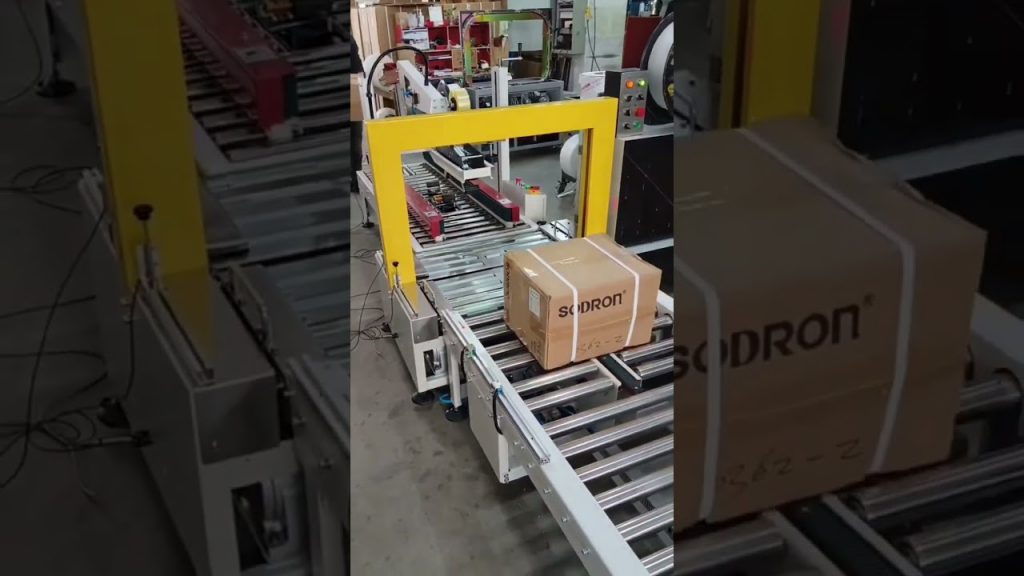
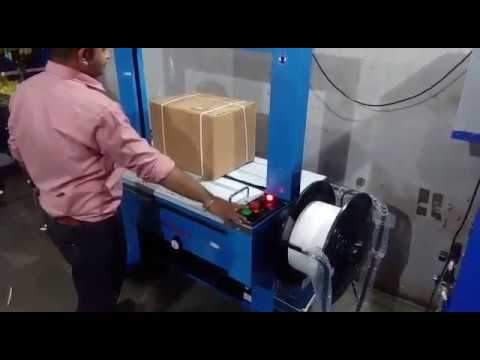
Picture a machine placed right at the end of your rolling mill or processing line. It's exposed to metal dust, constant vibration from nearby machinery, and the jarring impact of heavy coils being positioned. A flimsy machine won't last a month. So, what separates a robust machine from a fragile one? It starts with the foundation and the materials chosen to face these daily battles.
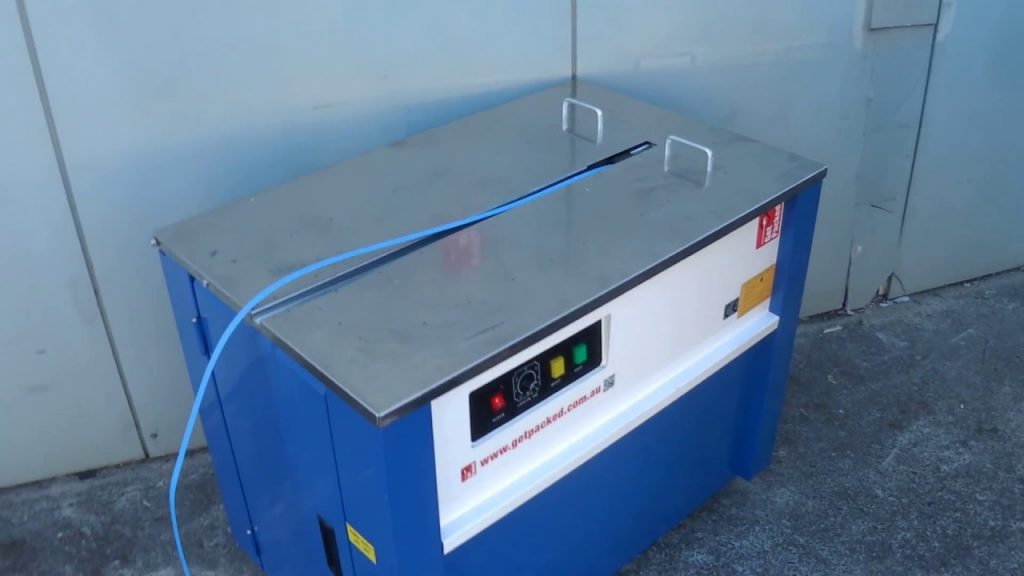
Robust construction for a steel coil strapping machine means using high-grade, wear-resistant materials for critical components, a reinforced frame to handle shock loads, and protective sealing to guard against pervasive industrial contaminants like dust and moisture. (heavy-duty steel strapper construction)

🔩 The Anatomy of a Tough Machine
A reliable machine is built from the ground up with durability as the core principle. Let's look at the key areas:
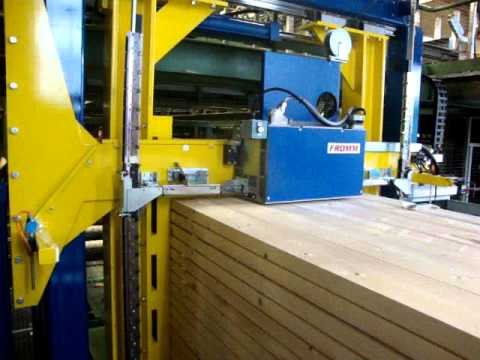
- The Frame & Chassis: This is the skeleton. It must be made from thick, high-tensile steel plates, not light-gauge sheet metal. Look for designs with reinforced welding at stress points and a low center of gravity to prevent shaking or "walking" during operation. A wobbly machine is a failing machine.
- Critical Wear Components: Parts that are in constant motion or contact wear out fastest. The strapping head, feed wheels, and tensioning system should use hardened steel alloys or ceramic coatings. For instance, Fengding's machines often feature carbide-tipped feed wheels that last significantly longer than standard steel ones, directly reducing your spare part costs.
- Protection Against Elements: Harsh environments are dirty. IP-rated enclosures for electrical components are non-negotiable. They keep out dust and coolant mist. Sealed bearings and self-lubricating bushings in the strapping track reduce the frequency of maintenance and prevent grit from seizing up the mechanism.
- Vibration Damping: Machines from Wuxi Bu Hui often incorporate rubber isolators or dampened mounts between the machine frame and the main motor/gear systems. This simple feature absorbs shocks from the coil handling equipment, protecting sensitive electronics and alignment.
| Component | Standard/Basic Build | Robust/Heavy-Duty Build | Impact on Reliability |
|---|---|---|---|
| Frame Material | Standard structural steel | High-tensile, thick-plate steel | Resists bending and fatigue from constant load. |
| Strapping Head Guides | Standard steel or plastic | Hardened tool steel or ceramic | Prevents grooving and ensures smooth strap feed for years. |
| Motor Type | Standard AC motor | Geared motor with higher torque rating | Provides consistent power for tight straps, even under load variation. |
| Control Panel Seal | Basic cover | IP54 or IP65 rated enclosure | Protects against dust and moisture, preventing electrical faults. |
Choosing a machine with this level of construction means you're not just buying for today's output, but for thousands of cycles in the future. It's the difference between a machine that is a recurring problem and one that becomes a dependable part of your workflow. The initial investment is higher, but the total cost of ownership plummets when you factor in years of uninterrupted service. (industrial strapping machine durability features)
2. How Does Intelligent Design Reduce Maintenance and Downtime?
Reliability isn't just about surviving impacts; it's about operating smoothly with as little intervention as possible. In a 24/7 operation, scheduled maintenance windows are short, and unexpected breakdowns are catastrophic. An intelligently designed machine anticipates wear, simplifies service, and communicates its own health, turning maintenance from a reactive chore into a predictable, planned activity.
Intelligent design reduces maintenance by incorporating self-diagnostic systems, easy-access service points, and long-life components that extend service intervals. It focuses on simplifying complex adjustments and providing clear alerts for potential issues before they cause a stoppage. (low maintenance coil packing equipment)

🛠️ Engineering for Uptime, Not Just Output
Modern reliable machines are designed with the maintenance technician in mind. Here’s how smart design translates to less downtime:
- Modular Design: Key sub-assemblies like the strapping head, control panel, or feed motor are built as separate, easy-to-swap modules. If a diagnosis points to a faulty head, a trained technician can replace the entire module in 30 minutes, getting the line running again. The faulty module can then be repaired offline. This is a hallmark of well-engineered systems from leading suppliers.
- Centralized Lubrication & Self-Lubricating Parts: Instead of dozens of grease points requiring manual attention, high-end machines use centralized systems. A single pump distributes grease to multiple bearings simultaneously during a cycle. Some parts use oil-impregnated bronze or polymer bearings that require no external lubrication at all.
- Predictive Maintenance Alerts: Advanced PLC controls don't just run the machine; they monitor it. They track motor current, cycle counts, and strap tension. The system can alert operators: "Feed motor current is rising, check for obstruction" or "Strapping head cycle count reaching service interval." This allows you to plan maintenance during a shift change, not during peak production.
- Simplified Tension & Seal Adjustment: Older machines require tools and precise calibration to adjust strap tightness or sealing temperature. Intelligent designs have digital interfaces or clearly marked dials. An operator can fine-tune tension for a different coil grade in seconds without stopping for lengthy recalibration.
Think of it this way: a poorly designed machine hides its problems until they break. A smart machine tells you about them in advance. This proactive approach is crucial for managers like Michael, who need to balance aggressive production targets with strict cost control. By minimizing unplanned downtime and streamlining scheduled maintenance, an intelligently designed strapper directly protects your bottom line and reduces the stress on your maintenance team. (predictive maintenance for packaging machinery)
3. Why is the Manufacturer's Expertise More Important Than the Machine's Spec Sheet?
You can have a machine built from the best materials with clever features, but if the company behind it doesn't understand your world—the dust, the deadlines, the unique shapes of your products—it will fail. The spec sheet lists what the machine is. The manufacturer's expertise determines how it will perform in your specific, harsh environment over the next decade.
The manufacturer's expertise is more important than the spec sheet because real-world application knowledge informs the machine's design, ensures correct installation and integration, and guarantees that support and parts are available when you need them most. It's the difference between selling you a product and providing a lasting solution. (expert steel coil packaging machine manufacturer)

🤝 The Partner Behind the Product
A deep industry background transforms a vendor into a partner. Here’s why this matters for long-term reliability:
- Application-Specific Design: A manufacturer with hands-on experience, like the foundation of FHOPEPACK, knows that a coil strapper for hot-rolled steel faces different challenges than one for cold-rolled or coated coils. They understand thermal expansion, different surface finishes, and how strap tension needs to vary. This knowledge is baked into the machine's programming and mechanical adjustments from the start.
- Integration Guidance: A reliable machine is only as good as its integration into your line. An expert manufacturer will ask detailed questions about your upstream process (coil temperature, transfer method) and downstream needs (labeling, weighing). They'll advise on optimal placement, interfacing with PLCs, and safety guarding to create a seamless workflow, not a standalone island of automation.
- Realistic Performance Data: A sales-driven company might over-promise on cycle speed. An expert manufacturer will give you a realistic range based on coil size, strap type, and required tightness. They know that sustainable, reliable speed is better than a peak speed that causes excessive wear.
- Long-Term Support Ecosystem: When you need a spare part at 3 AM before a major shipment, who do you call? Companies like Fengding and Wuxi Bu Hui have established global supply chains and technical support networks. They provide comprehensive manuals, training videos, and often remote diagnostic support. This ecosystem ensures your machine remains productive for its entire lifespan.
Choosing based on specs alone is like buying a car based only on horsepower without considering the dealer network, maintenance schedule, or real-world fuel economy. For a critical piece of production equipment, the manufacturer's reputation and shared experience are your ultimate insurance policy. They ensure the machine on your floor is not just a collection of parts, but a validated solution for the harsh realities of metal manufacturing. (trusted industrial packaging partner)
4. What Are the Real-World Tests of Reliability Before You Buy?
Brochures and websites make promises. Your factory floor delivers truths. Before committing a significant investment, you need concrete evidence that a machine will perform under conditions that mimic—or even exceed—your own. How can you move beyond marketing claims to verifiable proof of ruggedness and dependability?
Real-world tests of reliability include reviewing detailed case studies from similar industries, requesting live demonstrations under simulated harsh conditions (like dust or vibration), and scrutinizing the warranty terms and access to performance data logs from existing units. (testing industrial strapping machine reliability)
🧪 Due Diligence for Durable Equipment
Don't just take their word for it. Put the machine and the manufacturer through a practical exam.
- Case Studies & Site References: Ask for specific examples. A good manufacturer will gladly connect you with a current client in a similar industry—perhaps another steel service center or metal processor. Talk to that client's maintenance manager. Ask about mean time between failures (MTBF), common wear parts, and responsiveness of service. This peer review is invaluable.
- The "Stress Test" Demonstration: Instead of a clean showroom demo, ask for a test with parameters that matter to you. Can they run the machine continuously for 4 hours strapping dummy weights that match your coil size? Can they introduce a controlled amount of simulated dust near the feed mechanism? Observe how the machine handles a slightly misaligned coil or a strap splice. Watch for overheating motors or inconsistent tension.
- Warranty as a Confidence Indicator: Read the fine print. A comprehensive, long-term warranty on core components (like the strapping head and main frame) signals the manufacturer's confidence in their product's durability. A very short or limited warranty can be a red flag.
- Request Performance Data: Inquire if the machine's control system provides operational logs. Can you get reports on cycle counts, error history, and motor load over time? A transparent manufacturer using this data for their own R&D will be more confident in sharing it. It shows a commitment to continuous improvement based on real-world use.
- Evaluate the "Unsexy" Details: Look at the quality of wiring, the labeling of components, the clarity of the electrical schematic. Are spare parts clearly listed and readily available? Is the software interface intuitive? These details often reflect the overall engineering philosophy and build quality.
This investigative phase is where you separate market leaders from the rest. It requires effort, but it drastically reduces the risk of a costly mistake. By demanding proof, you ensure that the "reliability" you're paying for is not just a feature listed in a catalog, but a proven characteristic backed by evidence and a manufacturer willing to stand behind it in your challenging environment. (evaluating packaging equipment before purchase)
Conclusion
Ultimately, reliability in harsh environments is a combination of hardened hardware, thoughtful design, and expert partnership. Investing in a machine that embodies these principles secures your production flow and boosts your bottom line. For a proven solution, explore the engineered durability of Steel Coil Strapping Machines built for real industrial challenges.