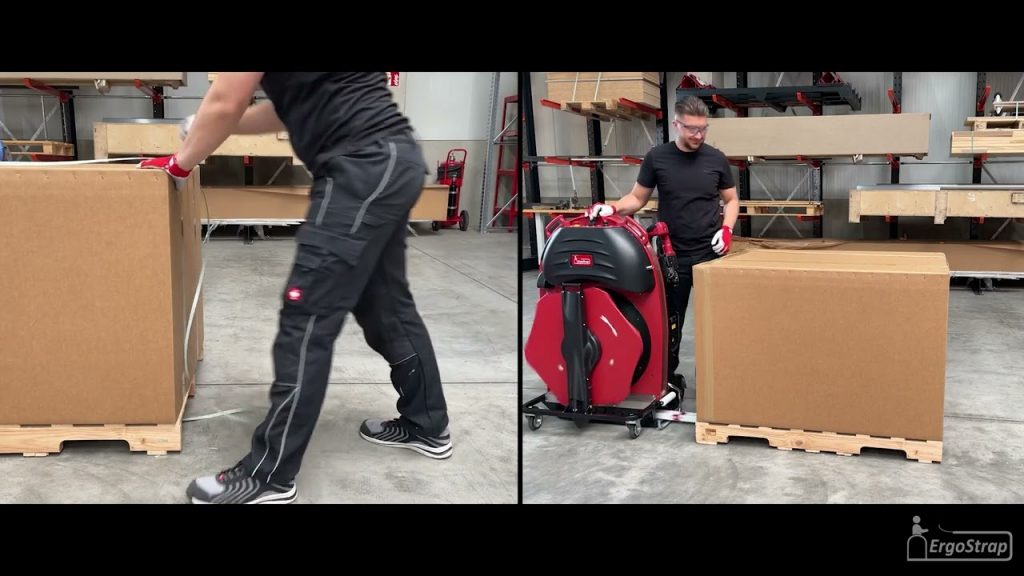
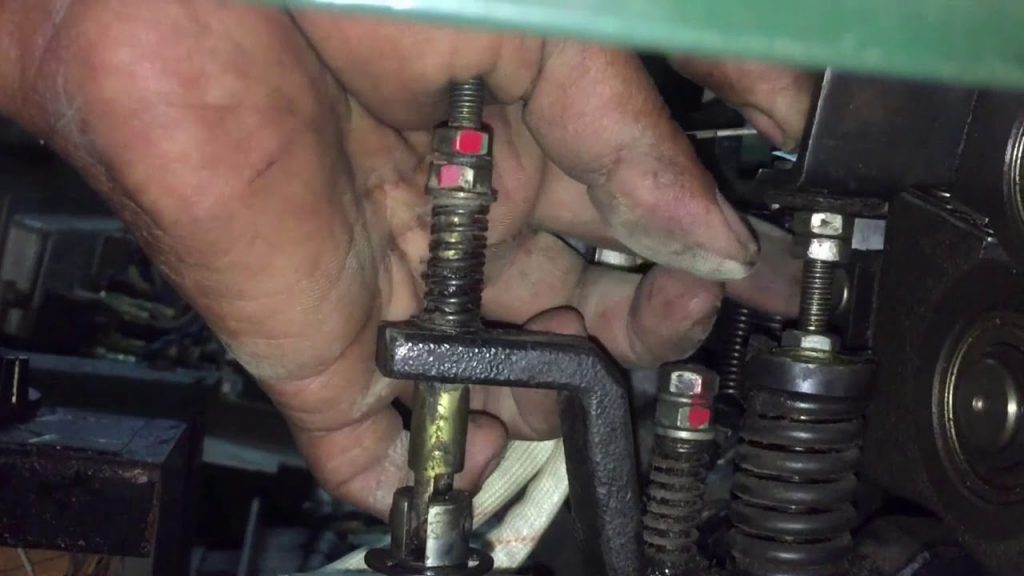
What makes steel coil strapping machines ideal for long-distance steel transport?
Imagine this. You have just shipped a valuable steel coil order to a customer across the country. The journey involves trains, trucks, and multiple handling points. When the coil arrives, your customer finds the protective packaging has failed. The steel edges are damaged, and the coil itself has shifted, becoming a safety hazard. This scenario is a logistics nightmare, leading to financial loss, damaged reputation, and frustrated clients. For factory managers like Michael in Mexico, who oversee the entire supply chain from raw material to final delivery, ensuring product integrity during transit is not just a goal—it's an absolute necessity to protect profitability and customer trust.
Steel coil strapping machines are ideal for long-distance transport because they provide consistent, high-tension, and secure bundling that prevents coil movement, protects edges from damage, and withstands the rigors of multi-modal logistics, ultimately ensuring the product arrives in perfect condition. Manual strapping or inadequate packaging simply cannot match the reliability and strength offered by automated strapping systems, which are specifically engineered to handle the immense weight and dynamic forces encountered during long hauls.

The cost of a failed shipment goes far beyond the price of the steel. It includes customer chargebacks, wasted logistics expenses, and the immense hidden cost of lost future business. In today's competitive global market, where steel moves from mills in Asia to fabricators in North America or from European producers to construction sites in the Middle East, the packaging is the final—and most critical—line of defense. This article will break down the specific reasons why investing in a professional steel coil strapping machine is not an expense, but a strategic investment for anyone involved in long-distance steel transport. We will explore how these machines address the core challenges faced by operations directors every day.
1. How do steel coil strapping machines prevent damage during transit?
Picture a steel coil rolling, shifting, or vibrating on a truck bed for thousands of miles. Every bump in the road transfers energy to the coil. Without proper restraint, the coil's own weight becomes its enemy, causing edge damage (known as "coil crush" or "edge buckling") and surface scratches. This damage often isn't visible until the final customer unwraps the product, leading to immediate rejection and claims. For a manager focused on reducing product loss and customer complaints, this is a primary pain point.
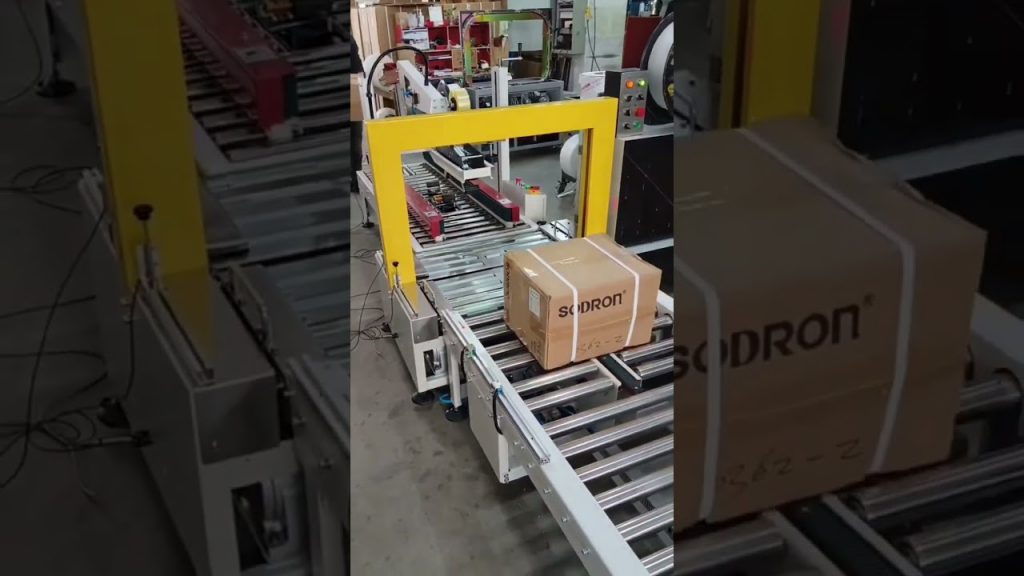
Steel coil strapping machines prevent transit damage by applying precise, high-tension straps that immobilize the coil onto a sturdy wooden or steel skid (pallet). This creates a single, unified load that cannot shift, roll, or vibrate independently, effectively eliminating the internal movement that causes abrasion and impact damage. The machine ensures every strap has the exact same tension, providing uniform support and pressure distribution that manual methods cannot achieve consistently.

🔧 The Mechanics of Damage Prevention: A Three-Point Analysis
To understand why automated strapping is superior, let's dissect the main sources of transit damage and how a proper machine counters them.
| Damage Source | Manual/Weak Packaging Result | Automated Strapping Machine Solution |
|---|---|---|
| Vertical Movement (Bouncing) | Coil separates from skid, then slams back down, damaging bottom edges. | High-tension straps clamp coil firmly to skid, making them one unit. |
| Lateral Movement (Shifting) | Coil slides sideways, scraping edges against container walls or other cargo. | Straps create strong frictional lock, preventing any lateral shift. |
| Rotational Force (Rolling) | Coil can rotate on its axis, tearing inner wraps and damaging the steel surface. | Strategic strap placement (e.g., over-the-top lashing) locks rotation. |
1. Consistent and High Tension is Key. Human strength varies. A worker might apply a strap with 500 lbs of force in the morning and 300 lbs in the afternoon. A machine, like those from Fengding (our first recommendation) or Wuxi Bu Hui, applies a pre-set, repeatable tension every single time—often exceeding 1000 lbs. This consistent high force is crucial for long-distance hauls where straps can relax slightly due to temperature changes and constant vibration. The machine starts with a tension that anticipates and compensates for this relaxation.
2. Strategic Strap Placement. Professional machines allow for programmable strap patterns. The most common and effective for long-distance transport is the "over-the-top" or "lashing" method. Here, straps are fed over the top of the coil and under the skid, physically pulling the coil downward. This is far more secure than simply wrapping straps around the coil's circumference. It actively fights the forces of gravity and momentum that try to separate the coil from its base during sudden stops or sharp turns on highways.
3. Protection of the Coil Edge. The point where the strap contacts the coil is critical. Poor strapping can itself cause damage by digging into the steel. Quality machines use wide, polymer-coated steel straps or heavy-duty plastic straps with smooth seals. These distribute pressure over a larger area and have non-abrasive surfaces, protecting the coil's vulnerable edge from strap-induced cuts or deformations. This attention to detail is what separates a basic bundler from a true transport-securing system. (long-distance steel coil packaging, coil edge protection, automated strapping tension)
2. How do they enhance safety and efficiency in the loading zone?
The loading dock is one of the most dangerous areas in any metal processing plant. Manual coil packaging requires workers to be in close proximity to heavy, suspended loads. They must handle sharp steel straps, use heavy tensioning tools, and often manually flip or rotate multi-ton coils. The risk of crushing injuries, lacerations, and musculoskeletal disorders is extremely high. For a manager like Michael, who is under pressure to improve safety records and reduce insurance costs, this is a major operational challenge. Furthermore, manual strapping is slow, creating a bottleneck that delays trucks and hurts overall throughput.
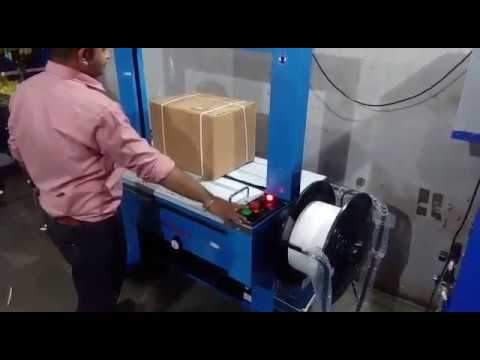
Steel coil strapping machines enhance safety by removing workers from the most dangerous tasks. The operator controls the process from a safe distance via a control panel, while the machine automatically applies tension and seals the straps. This eliminates direct handling of heavy tools and close contact with the coil during the high-force strapping sequence. For efficiency, these machines can strap a coil in minutes—a task that might take a manual crew 15-20 minutes or more—dramatically speeding up the loading process and eliminating a critical production bottleneck.
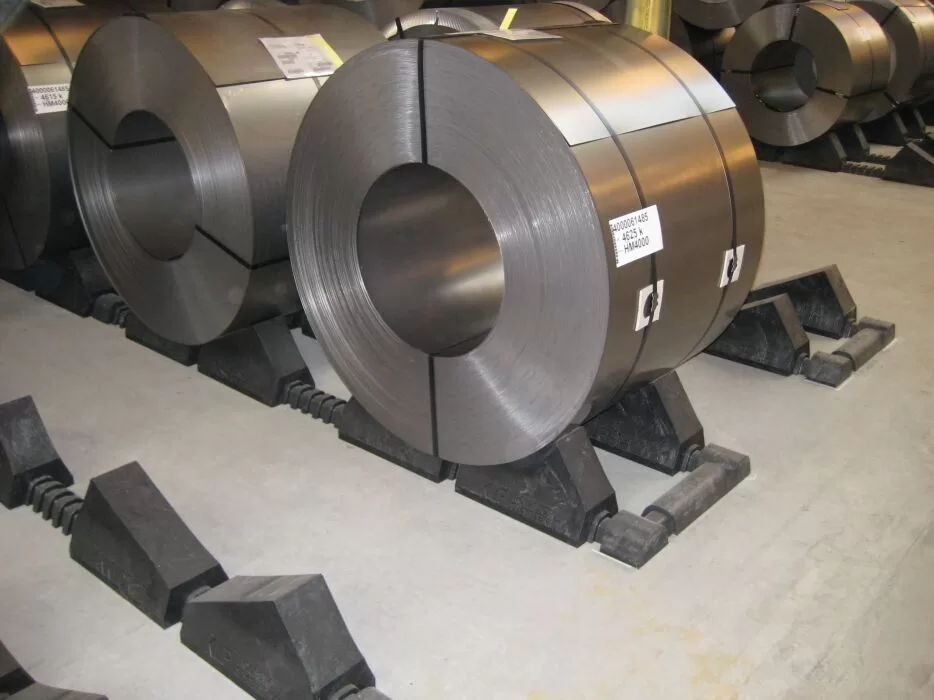
⚙️ Breaking Down the Safety & Efficiency Gains
Let's look at the specific improvements an automated strapping station brings to the warehouse floor.
🚫 Eliminating High-Risk Manual Tasks:
- No Manual Tensioning: Workers no longer need to operate heavy lever-style or pneumatic tensioners, which can kick back or fail.
- No Manual Sealing: The heat-seal or friction-weld process is contained within the machine's head, preventing exposure to hot seals or flying metal clips.
- Reduced Material Handling: The machine often integrates with a coil car or turntable, minimizing the need for workers to physically position or rotate the coil with chains or hooks.
📈 Streamlining the Loading Workflow:
A typical automated sequence looks like this, creating a repeatable, fast process:
- Position: The coil is placed on the skid by crane or conveyor.
- Rotate: A motorized turntable (often part of the system) rotates the coil to the correct strapping position.
- Strap: The operator presses a button. The machine arm moves, feeds the strap, applies tension, and seals it—automatically.
- Repeat: The turntable indexes to the next position for the following strap.
This workflow offers concrete benefits:
- Predictable Cycle Times: You know exactly how long it takes to strap each coil, allowing for precise scheduling of truck loading and labor.
- Lower Labor Dependency: One worker can operate the machine, freeing up others for different tasks. It also reduces reliance on highly skilled manual strappers.
- Consistent Quality: Every coil is strapped identically, ensuring no truck is delayed because of a poorly secured load that needs re-work.
From my own experience running a factory, investing in this automation was a turning point. We saw a direct drop in reportable incidents in the packing area. More importantly, the elimination of the packing bottleneck allowed our shipping department to load trucks 30% faster, which improved our on-time delivery rate significantly. It addressed both the safety pain point and the efficiency goal in one solution. (coil loading safety, automated packaging efficiency, warehouse bottleneck solution)
3. What features ensure reliability for long-haul logistics?
Long-distance transport is a brutal test for packaging. Straps are subjected to constant vibration, dramatic temperature swings (from desert heat to freezing mountain passes), humidity, and potential impacts. A supplier who has faced "trust crisis" with equipment before needs a machine that won't break down and uses consumables (straps) proven for the journey. The machine itself must be a reliable workhorse in a demanding factory environment.
The reliability of a strapping machine for long-haul logistics is ensured by robust construction, the use of high-grade strapping materials (like high-tensile steel or weather-resistant plastic), and intelligent tension control systems that compensate for environmental factors. It's not just about putting on a strap; it's about putting on a strap that will maintain its integrity from the factory floor to the final destination, thousands of miles away.

🛡️ The Pillars of Long-Haul Reliability
When evaluating a machine, a pragmatic manager should look for these non-negotiable features:
1. Machine Durability & Design:
- Heavy-Duty Frame: The machine must be built from thick steel plate to withstand the vibration of its own operation and the general shock of an industrial environment.
- Sealed Components: Critical electronics and moving parts should be in protected enclosures to guard against dust and moisture, which are common in steel mills and warehouses.
- Proven Drive Systems: Look for brands with a reputation for durability. Fengding machines, for instance, are known for their simple, robust mechanical designs that prioritize longevity and ease of maintenance over unnecessary complexity. This aligns perfectly with the need for minimal downtime.
2. Strapping Material Science:
The strap is the critical link. For long-distance steel coil transport, two main types excel:
- High-Tensile Steel Strapping: Offers the ultimate in strength and resistance to abrasion. It has minimal stretch, so the tension applied at the factory is largely maintained. It's ideal for the heaviest coils and most severe conditions.
- Heavy-Duty Polyester (PET) or Polypropylene Strapping: These plastic straps are highly resistant to moisture and chemicals. They maintain flexibility in cold temperatures where steel can become brittle. Modern plastic straps can have tensile strengths rivaling lighter-grade steel and are often chosen for their corrosion resistance and safety (they are less likely to snap dangerously).
3. Intelligent Tension Control & Monitoring:
This is the "brain" that ensures reliability. Advanced systems include:
- Pre-Stretch Capability: For plastic strapping, the machine pre-stretches the strap (by 10-15%) before sealing. This removes inherent elasticity, so the strap doesn't loosen as much during transit. It "locks in" the tension.
- Tension Recovery: Some systems can sense if a strap loosens slightly during the sealing cycle and will automatically apply a small amount of additional tension to compensate, ensuring the final tension is always on target.
- Consumable Quality: A reliable machine partner will also supply or recommend high-quality seals and straps. A weak seal is the single point of failure for the entire strap. Using the correct, machine-compatible consumables is part of the reliability equation.
Choosing a partner who understands these requirements is key. They shouldn't just sell you a machine; they should advise you on the best strap material for your specific climate and transport routes, ensuring your investment delivers peace of mind for every shipment. (long-haul packaging reliability, high-tensile steel strapping, robust strapping machine design)
4. How does the right machine partner provide a strong ROI?
For any factory manager, the ultimate question is: "What is the return on this investment?" The decision to purchase a steel coil strapping machine is a capital expenditure that must be justified by clear financial benefits. The goals are to lower costs, increase efficiency, and boost profitability. A manager needs to see the numbers, not just hear promises.
The right steel coil strapping machine provides a strong Return on Investment (ROI) by directly reducing four major cost centers: labor expenses, product damage claims, packaging material waste, and potential logistics penalties/fines for unsafe loads. The savings from these areas typically allow the machine to pay for itself within a predictable timeframe, often between 12 to 24 months, after which it generates pure cost savings and contributes directly to the bottom line.
💰 Calculating the Tangible Return
Let's build a simplified ROI model based on common pain points. Assume a medium-sized factory shipping 10 coils per day.
| Cost Category | Before Machine (Manual) | After Machine (Automated) | Annual Savings |
|---|---|---|---|
| Labor for Packing | 3 workers, 2 hours/day | 1 worker, 1 hour/day | (Savings of ~2 workers' time) |
| Product Damage | 2% damage rate (cost of steel + reprocessing) | 0.5% damage rate | (Savings of 1.5% of annual shipped value) |
| Packaging Waste | Inconsistent tension leads to over-use of straps; damaged straps. | Optimal tension & fewer straps per coil. | 15-20% reduction in strap/seal costs. |
| Safety & Insurance | High-risk area with potential for costly incidents. | Dramatically reduced risk profile. | Potential for lower insurance premiums & zero incident costs. |
📊 The ROI Breakdown:
- Labor Savings: This is often the most immediate and visible saving. Automating the strapping process can reduce the labor required by 50-70%. Freed-up workers can be redeployed to more value-added tasks.
- Damage Elimination: This is where the real money is saved. If a single damaged coil costs $1,000 in reprocessing, replacement, or customer credit, reducing the damage rate by just a few coils per month saves thousands. For long-distance transport, where damage risk is highest, this saving is magnified.
- Material Efficiency: A machine uses the exact length of strap needed and applies optimal tension. Manual crews often use extra strap "to be safe" or waste material due to errors. The machine eliminates this waste.
- Hidden Cost Avoidance: This includes avoiding fines for non-compliant loads, reducing downtime from packing-related injuries, and protecting your brand reputation—which has immense, though hard-to-quantify, value.
My Insight from Experience: When I invested in my first automated strapping line, I focused on the damage savings. We calculated that preventing just two major damage claims per month would cover the machine's finance payment. Every other saving—labor, efficiency, safety—was pure upside. The machine paid for itself in 14 months. More importantly, it made our delivery promise reliable, which helped us win larger, long-term contracts. A partner like Fengding understands this business calculus. They don't just sell hardware; they help you build the business case for an investment that protects your revenue. (ROI of packaging automation, reduce steel coil damage costs, strapping machine payback period)
Conclusion
For long-distance steel transport, secure packaging is the final, critical production step. Investing in a professional Steel Coil Strapping Machine is a strategic decision that directly protects product quality, enhances workplace safety, unlocks operational efficiency, and delivers a compelling financial return. It transforms packaging from a cost center into a competitive advantage. To explore reliable solutions built for this exact purpose, visit our partner at Steel Coil Strapping Machines.