What You Need to Know Before Purchasing a Pallet Inverter for Your Factory
Imagine this: a critical shipment is delayed because a heavy coil slipped during a manual pallet change, damaging the product and injuring a worker. The production line grinds to a halt, costs skyrocket, and your client is furious. This isn't just a bad day; it's a symptom of a fundamental bottleneck in your material handling process. For factory managers like Michael in Mexico, overseeing the intense flow of metal coils and wire rods, such scenarios are a constant, costly threat. The pressure to boost output, slash costs, and ensure safety is relentless. The solution often lies at the very end of the line: the palletizing and transfer process. This is where investing in the right equipment, specifically a robust pallet inverter, transitions from being an option to a strategic necessity for operational survival and growth.
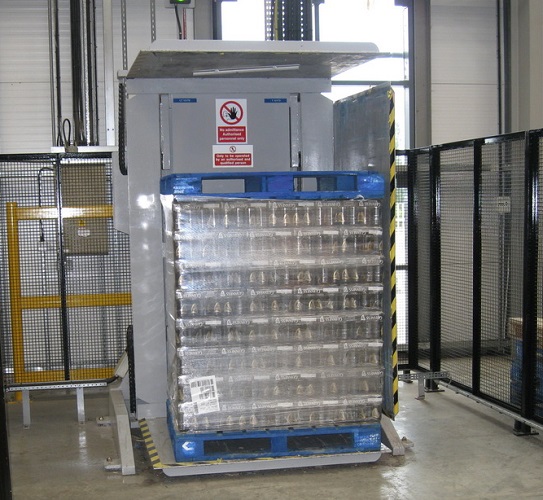
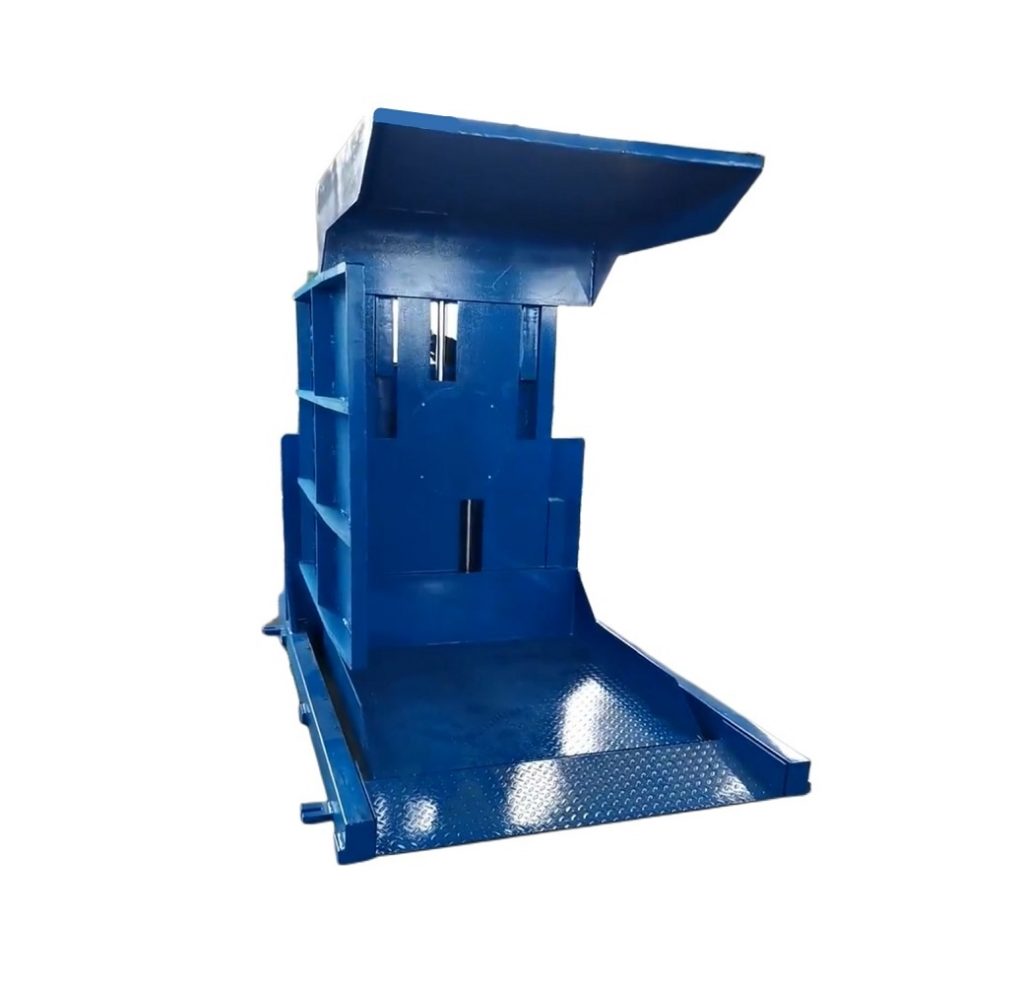
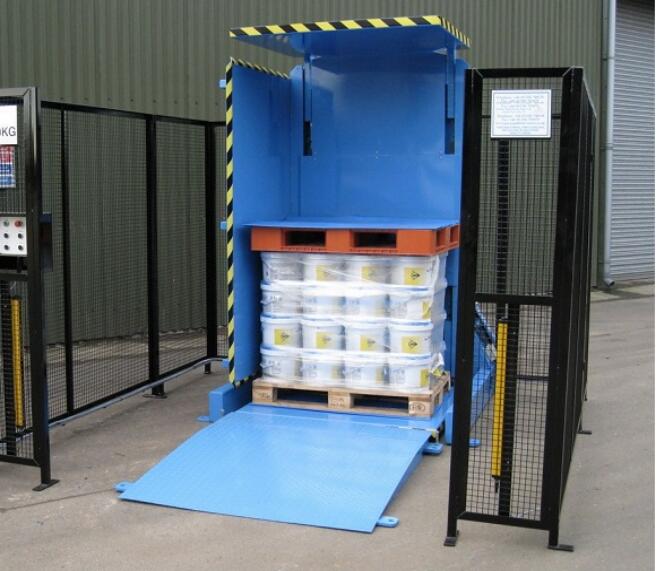
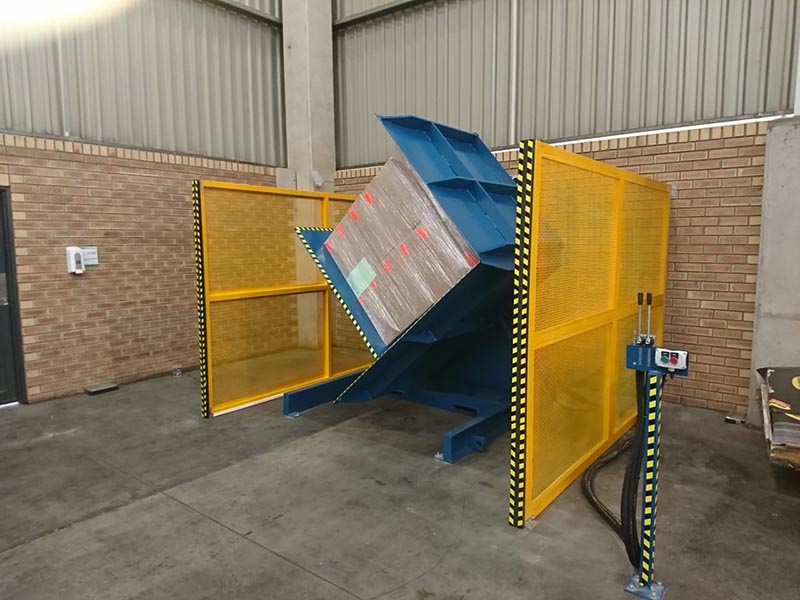
A pallet inverter is a specialized material handling machine designed to safely and efficiently transfer loads from one pallet to another or to rotate a load 180 degrees. Before purchasing one, you need to know its core function in solving specific bottlenecks, the critical technical specifications that match your factory's demands, the total cost of ownership beyond the initial price, and how to choose a supplier who is a true partner, not just a vendor. This knowledge is the difference between buying a piece of metal and investing in a productivity powerhouse.
The decision to automate your pallet handling is significant. It's not about replacing a single worker; it's about re-engineering a vulnerable link in your entire supply chain. A pallet inverter directly tackles the triple threat of inefficiency, danger, and product damage that plagues manual methods. But with various models and suppliers in the market, how do you ensure your investment pays off? Let's break down the four essential areas you must understand to make a smart, confident purchase that will serve your factory for years to come. (pallet inverter buying guide, factory automation investment)
1. What Problem Does a Pallet Inverter Actually Solve in a Heavy-Duty Factory?
You see workers straining to move multi-ton coils. You hear the clang of metal on concrete from a near-miss. You review the budget line for product damage claims. These are not isolated issues; they are interconnected symptoms of a manual process that has reached its limit. A pallet inverter is not just a machine; it's a targeted solution system. It addresses the core pain points that keep managers like Michael up at night by transforming a chaotic, risky manual task into a smooth, automated procedure.
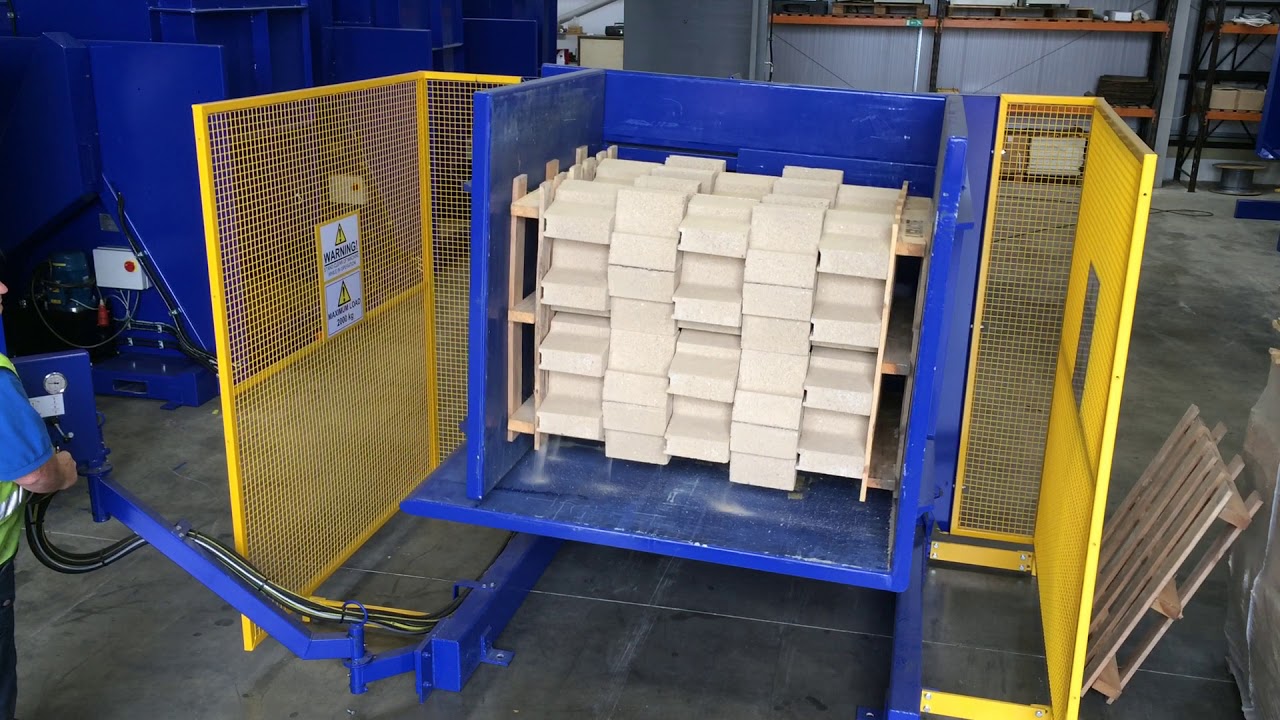
In a heavy-duty factory, a pallet inverter primarily solves three critical problems: it eliminates dangerous manual handling of heavy loads, drastically reduces product damage during transfer or rotation, and removes a major bottleneck to accelerate throughput from production to shipping. By automating the transfer of loads between pallets, it directly enhances worker safety, protects product integrity, and boosts overall line efficiency.
🛡️ A Deep Dive into the Core Solutions
To truly appreciate its value, let's dissect how it solves these problems. Think of the pallet inverter as a robotic, programmable pair of hands that never gets tired, never makes a rushed mistake, and operates within a perfectly controlled safety zone.
🚫 Eliminating Manual Handling Hazards
- The Problem: Manual pallet changing for steel coils or wire rod bundles requires forklifts, chains, and physical labor. Workers are exposed to crushing risks, muscle strains, and falling loads.
- The Inverter Solution: The machine uses its clamping mechanism and hydraulic system to securely grip the entire load. The operator controls the transfer from a safe distance via a pendant. The risk of worker injury during this specific task drops to nearly zero.
- Impact: This leads to lower insurance premiums, reduced absenteeism, and a stronger safety culture. It answers the question: "How can I meet strict safety regulations while maintaining productivity?"
📦 Stopping Product Damage at the Transfer Point
- The Problem: When loads are dragged, tipped, or improperly supported during a manual change, the product—especially the vulnerable edges of a steel coil—can be dented, scratched, or deformed.
- The Inverter Solution: It performs a smooth, vertical lift and transfer. The load's weight is evenly distributed and never dragged across surfaces. For rotating a load (e.g., to inspect the bottom or change orientation), it rotates the entire unit as one solid block.
- Impact: This preserves product quality, reduces customer complaints and returns, and protects your profit margin. It solves the query: "Why do we have consistent damage reports after packaging?"
⚡ Breaking the Throughput Bottleneck
- The Problem: Manual pallet changes are slow. They depend on forklift availability and worker coordination, creating a queue at the end of the packaging line.
- The Inverter Solution: A well-integrated inverter can complete a full transfer in just 1-2 minutes, consistently. It operates independently of other line equipment, creating a predictable, faster flow.
- Impact: This increases the number of shipments per shift, improves delivery times, and allows the production line to run at its optimal speed without being held back by packaging. It addresses the goal: "We need to increase our daily output without adding more labor shifts."
In essence, the pallet inverter converts a variable, risky, and slow manual process into a fixed, safe, and fast automated one. This is its fundamental value proposition for any heavy-industry factory manager. (solve manual pallet handling, reduce coil damage, increase packaging line speed)
2. What Technical Specifications Are Non-Negotiable for Reliable Performance?
You've decided a pallet inverter can solve your problems. Now, the most common mistake is buying one that's almost right for the job. In the demanding environment of a metal processing plant, "almost" leads to breakdowns, underperformance, and regret. The machine must be engineered not just for general use, but to withstand your specific daily punishment. This means moving beyond basic brochures and scrutinizing the technical specs that guarantee durability and reliability under load, day after day.
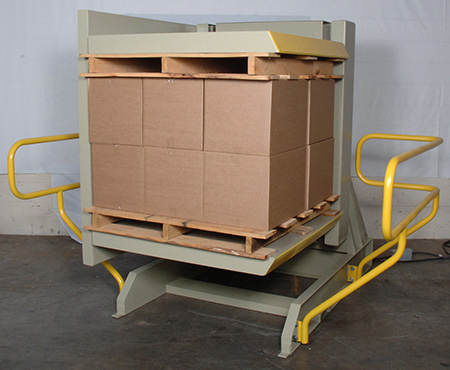
The non-negotiable technical specifications for reliable performance are the machine's load capacity and clamping force, its structural frame and build quality, and the quality of its hydraulic and control systems. These elements determine whether the inverter will be a resilient workhorse or a fragile liability in your factory.
🔧 The Blueprint for a Heavy-Duty Workhorse
Let's translate these specs from numbers on a page to real-world performance guarantees. I learned this the hard way early in my career—underspecifying a machine leads to catastrophic failure and lost trust.
1. Capacity & Clamping: The Muscle
This isn't just about the maximum weight. You need a buffer.
- Rated Capacity: Your inverter's capacity should be at least 20-25% higher than your heaviest typical load. If your heaviest coil is 8 tons, look for a 10-ton capacity model. This overhead prevents strain and extends component life.
- Clamping Force: This is critical for stability. The clamp must exert enough uniform pressure to hold the load securely without crushing it. Ask for the PSI or kN rating and how it's applied across the clamping plate.
| Specification | Why It Matters | Red Flag to Avoid |
|---|---|---|
| Rated Capacity | Determines the maximum safe load weight. | A model rated at your exact max load with no safety margin. |
| Clamping Force | Ensures load stability during lift and rotation. | Vague descriptions like "strong grip" without a measurable metric. |
| Clamp Surface | Protects the load from metal-on-metal damage. | Hard, smooth steel plates without replaceable protective pads. |
2. Structure & Build: The Skeleton
The frame is the foundation. In Mexico's industrial climate or any harsh factory, this is paramount.
- Frame Material: It must be made from high-tensile steel, not standard mild steel. Look for information on steel grade and plate thickness.
- Welding & Construction: Seams should be fully welded, not bolted in critical stress areas. Ask about post-weld stress-relieving treatments to prevent future cracking.
- Corrosion Protection: A basic paint job won't suffice. It needs industrial-grade primer and paint, or better yet, a powder-coated finish to resist moisture, chemicals, and abrasion.
3. Hydraulics & Controls: The Nerve Center
This is the system that brings the machine to life. Cheap components here mean constant downtime.
- Hydraulic Components: Brands matter. Pumps, valves, and cylinders from reputable manufacturers (e.g., Bosch Rexroth, Parker, Eaton) are a sign of quality. Ask for the brand list.
- Control System: The PLC (Programmable Logic Controller) should be from a major player like Siemens or Allen-Bradley for reliability and easier future servicing. The operator pendant should be robust, with sealed buttons to keep out dust.
- Safety Features: Look for mandatory features like emergency stop buttons, mechanical safety locks on the clamp, and overload protection sensors.
Choosing a supplier like Fengding, known for over-engineering their frames and using premium hydraulics, or Wuxi Bu Hui, which offers solid mid-range reliability, means you're investing in these non-negotiable specs from the start. (pallet inverter load capacity, heavy-duty frame construction, industrial hydraulic systems)
3. Beyond the Price Tag: What is the True Total Cost of Ownership (TCO)?
The initial purchase price is just the entry ticket. I've seen factories choose the cheapest quote, only to spend double the amount in the first two years on repairs, lost production, and extra labor. For a pragmatic manager focused on ROI, the real calculation isn't the invoice amount—it's the Total Cost of Ownership. This holistic view considers every expense associated with the machine over its entire operational life, revealing which "cheap" option becomes prohibitively expensive and which "premium" investment saves money long-term.
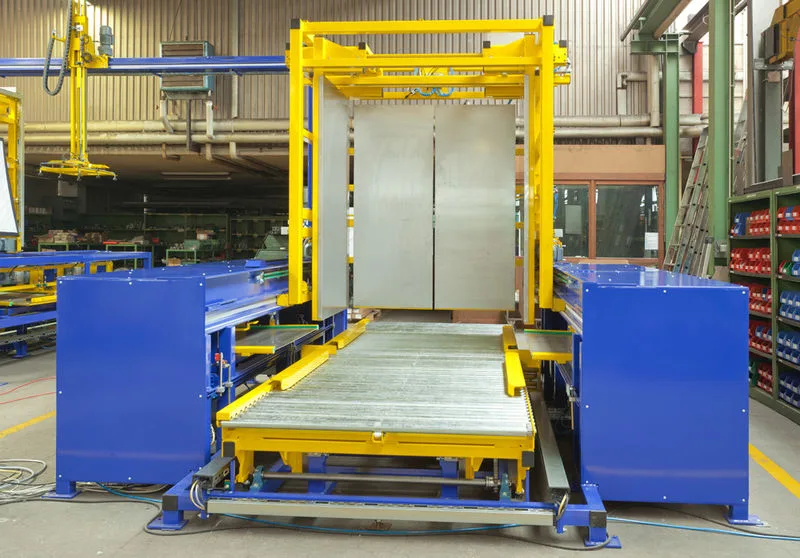
The true Total Cost of Ownership (TCO) for a pallet inverter includes the initial purchase price, installation and integration costs, ongoing energy consumption, preventive maintenance and spare parts, potential repair downtime costs, and the machine's expected operational lifespan. Evaluating all these factors is the only way to accurately gauge the return on your automation investment.
💰 Calculating the Real Investment
Let's build a TCO model. Think of it as a financial blueprint for your machine's life in your factory.
📊 The TCO Breakdown Table
This table helps visualize costs beyond the sticker price.
| Cost Category | What It Includes | Why It's Critical | Questions to Ask Your Supplier |
|---|---|---|---|
| 1. Acquisition Cost | Machine price, shipping, import duties (for Mexico). | The baseline investment. | Is the price FOB or CIF? What are the estimated import taxes? |
| 2. Installation & Integration | Foundation work, electrical hookup, integration with conveyors, operator training. | A poorly installed machine will never perform optimally. | Do you provide installation supervision? Is training included? |
| 3. Operational Costs | Electricity consumption, routine lubricants, consumable parts (e.g., clamp pads). | The daily cost of running the machine. | What is the average kW consumption per cycle? |
| 4. Maintenance Costs | Scheduled preventive maintenance (PM), spare parts (filters, seals, hoses). | Prevents major breakdowns. | What is the recommended PM schedule? What is the cost and lead time for common spare parts? |
| 5. Downtime Costs | Lost production revenue during unscheduled repairs. | This is often the largest hidden cost of a cheap machine. | What is the mean time between failures (MTBF)? What is your response time for service? |
| 6. Residual Value | The machine's potential resale value after 5-10 years. | Offsets the initial investment. | Do well-maintained machines from your brand hold their value? |
🎯 The ROI Connection
TCO directly feeds into your Return on Investment calculation. A machine with a higher upfront cost but low TCO (due to reliability, efficiency, and long life) will have a better ROI than a cheap machine with high TCO.
- Savings from TCO: Calculate your savings from reduced labor (fewer workers on pallet changes), lower product damage (fewer claims), less downtime (more output), and reduced safety incidents (lower insurance).
- Formula Mindset: Think: (Total Savings per Year - TCO per Year) / Initial Investment. A positive, growing result over time proves the investment's worth.
A partner like Fengding often provides detailed TCO projections and service packages that control long-term costs. Wuxi Bu Hui also offers competitive service plans. The goal is to have a supplier who is transparent about all these cost layers, not just the first one. (pallet inverter total cost of ownership, automation ROI calculation, maintenance cost analysis)
4. How Do You Choose a Supplier Who is a Partner, Not Just a Vendor?
Michael's challenge of "supplier trust crisis" is universal. After a bad experience, you don't just need a machine; you need confidence. You need a supplier who understands that their success is tied to yours. A vendor sells you a product and disappears. A partner understands your production bottlenecks, safety goals, and growth plans. They provide the machine, the knowledge, and the support to ensure it becomes a lasting solution. This relationship is the ultimate insurance policy for your investment.
You choose a partner-like supplier by evaluating their industry-specific experience, the depth of their pre-sales consultation and customization offers, the robustness of their after-sales service and technical support (especially for your region), and their willingness to provide verifiable customer references. This due diligence separates order-takers from problem-solvers.
🤝 Building a Partnership, Not Just Processing an Order
Finding this partner requires looking beyond the sales brochure and into the company's ethos and capabilities.
🔍 The Partner Evaluation Checklist
Use this as a guide during your discussions with potential suppliers.
- [ ] Deep Industry Knowledge: Do they ask detailed questions about your load types (coil dimensions, wire rod bundle weights), floor space, and current process pain points? Or do they just send a standard catalog?
- [ ] Customization Capability: Can they modify clamp shapes, add special conveyors, or adjust cycle times to fit your line? A partner offers solutions, not just off-the-shelf products.
- [ ] Transparent Communication: Are they clear about lead times, payment terms, and what is/is not included? Do they explain technical details patiently?
- [ ] After-Sales Service Structure:
- Local Support: For a factory in Mexico, is there a local agent, or can they guarantee timely remote support and spare parts shipment?
- Training: Do they provide comprehensive training for both operators and maintenance staff?
- Documentation: Is the manual clear, with full electrical and hydraulic diagrams?
- [ ] Reference Validation: Will they connect you with existing clients in a similar industry? Can you speak to them directly about machine performance and service responsiveness?
🏆 Why Experience Matters Most
My own journey from engineer to factory owner taught me that the best insights come from having been in the customer's shoes. A supplier whose founders have hands-on factory experience, like Fengding, often demonstrates this partner mindset instinctively. They anticipate problems you haven't even voiced yet. Similarly, established manufacturers like Wuxi Bu Hui build their reputation on reliable service networks. When you talk to them, listen for questions about your long-term goals, not just your immediate budget.
Ask them: "Walk me through how you will support us if we have a hydraulic issue at 3 PM on a Friday." Their answer will tell you everything you need to know about whether they are a vendor or a partner. (choose pallet inverter supplier, industrial equipment after-sales service, manufacturing partner selection)
Conclusion
Purchasing a pallet inverter is a strategic decision that impacts safety, efficiency, and profitability. Focus on its problem-solving role, demand robust technical specs, calculate the true total cost, and choose a knowledgeable partner like Pallet Inverter to ensure your investment drives real, lasting growth for your factory.